

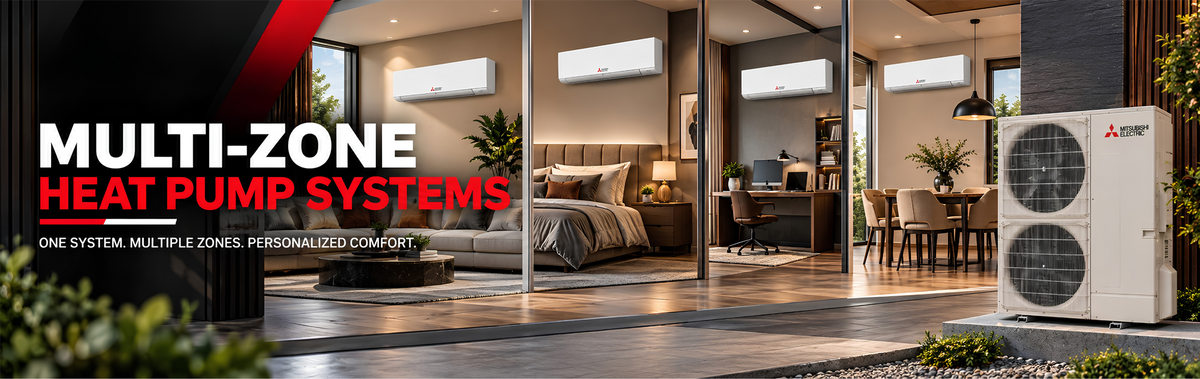
Browse by Multi-Zone Heat pump Systems Category


One thermostat for a whole house sounds simple until you live with it. The upstairs bedrooms run hot, the basement stays cold, and someone is always changing the setting. Multi-zone heat pump systems split the house into areas that each get their own temperature. Mitsubishi builds them around one outdoor unit that feeds several indoor units, so you can heat the living room, cool the office and leave the guest room off at the same time. Below are the Mitsubishi multi-zone setups we carry, in standard and Hyper-Heat versions.
What Are Multi-Zone Heat Pump Systems?
Multi-zone heat pump systems connect a single outdoor unit to two or more indoor units in different rooms. Each indoor unit has its own controls, so each room runs on its own setting. You'll also hear this called a multi-zone mini split system.
The outdoor unit works as a multi-zone mini split heat pump. It moves heat into the house in winter and pulls it out in summer. And since one outdoor unit serves several rooms, you don't end up with a row of condensers along the side of the house.
If you only need to handle one room, our single zone heat pump systems are the simpler fit.
Why Choose a Mitsubishi Multi-Zone Mini Split
- Every room on its own setting. Bedrooms can stay cool at night while the kitchen stays comfortable.
- One outdoor unit for several rooms. Less equipment outside, and a tidier yard.
- Inverter-driven compressor. The outdoor unit adjusts its output to how many rooms are calling for heat or cooling, instead of running flat out.
- Indoor styles you can mix. A wall mount in the bedroom, a ceiling cassette in the kitchen, a slim ducted unit where you'd rather not see anything.
- Heating and cooling from one setup. No separate furnace and AC to keep track of for those rooms.
Ported vs Branch Box: Two Ways to Set It Up
Mitsubishi offers multi-zone heat pump systems in two layouts. Which one fits mostly comes down to how many rooms you're covering.
- Ported systems: Refrigerant lines run from ports on the outdoor unit straight to each indoor unit. It's a clean layout for a handful of rooms.
- Branch box (Smart Multi) systems: Lines run from the outdoor unit to a branch box, then out to the indoor units. This layout handles more zones and lets you put ducted and ductless units on the same system.
Both layouts come in standard and Hyper-Heat versions. If your winters stay below freezing for weeks, a Hyper-Heat Mitsubishi multi-zone heat pump is built to keep heating when a standard model starts to struggle.
How to Choose a Multi-Zone Mini Split System
- List the rooms. Note which ones need their own control and which can share.
- Size each zone. Every room needs the right BTU rating, and the total has to fit what the outdoor unit can carry.
- Pick indoor styles room by room. Match each one to the ceiling, the wall space and how visible you want it.
- Think about your winters. Mild climates do fine with standard models. Long freezes call for Hyper-Heat.
For larger open spaces like offices and shops, the Mitsubishi P-Series mini split line may suit you better.
Shop Mitsubishi Multi-Zone Systems at AC Units For Less
Browse the ported and branch box categories above to compare each Mitsubishi multi-zone heat pump by capacity, zone count and specs. Many products show a lower price once they're in your cart. To see the rest of the brand's lineup, visit our Mitsubishi HVAC systems page.
FAQs
Q1. How many rooms can a multi-zone heat pump system handle?
It depends on the outdoor unit. Ported models suit a few rooms, while branch box systems handle more. Check the zone count listed on each product.
Q2. Single zone or multi-zone: which do I need?
For one room, go single zone. For several rooms that each need their own temperature, a multi-zone mini split heat pump makes more sense.
Q3. Can a Mitsubishi multi-zone mini split mix different indoor units?
Yes. Wall mounts, floor units, cassettes and ducted units can share one system, depending on the outdoor unit you choose.

