


Why Choose a Goodman GLXS R32 Air Conditioner?
Summer bills in a hot state can sting, and an aging R-410A system usually makes them worse. If you are shopping for a new outdoor unit this year, the Goodman...
Discounts Available | Add to Cart for your Savings | Damos la bienvenida a hablantes de español | Authorized Dealer | B2B program


What type of HVAC system are you searching for today? Choose a type from the options here to start finding the best fit for your home’s comfort needs.

Split systems have equipment installed both inside and outside the home. In a Split System, the condenser is installed outside the home on the ground or roof. The furnace or air handler is installed inside the home in either the attic, a closet or in the garage. The indoor and outdoor components of a Split System are connected by refrigeration pipes and low-voltage wiring. Air is distributed through a duct system to each room in the home.


Package systems can be heat pump or a gas furnace. These systems have the same aspects of a split system, just all in one cabinet. They can be located on the roof or on the ground. Rooftop units will have a metal stand it sits on and the air is distributed through a sheet metal elbow that attaches from the system to the roof. Package systems can also be located on the ground. They will be sitting on a concrete slab or pavers. They will attach to the home with a sheet metal box that will distribute the air throughout the home.


Rates from 0%–36% APR. Payment options through Shop Pay Installments are subject to an eligibility check and are provided by these lending partners: affirm.com/lenders. Options depend on your purchase amount, and a down payment may be required. State notices to consumers: affirm.com/licenses.
For example, an $800 purchase could be split into 12 monthly payments of $72.21 at 15% APR, or 4 interest-free payments of $200 every 2 weeks.


HOTPOINT
HOTPOINT PTAC 12000 BTU 230/208 VOLT 20A E HEAT R32 SERIES A AHES12D3XXA


GE


Amana
Amana 12000 BTU Class 11.2 EER - R32 - 5.0 kW - 30 Amp - 265V PTC124J50AXXX


Mitsubishi


Daikin
Daikin 115V Oterra 12000 Btu 20 SEER2 R-32 Single Zone Ductless Mini Split Heat Pump System


Goodman


Goodman


Goodman


Goodman


Goodman
GE


GE


GE
PH80S10BNY - Ge profile geospring energy star 80 gallon smart realmax premium hpwh 240v


GE


GE
PH50S10BNY - Ge profile geospring energy star 50 gallon smart realmax premium hpwh 240v


GE


GE


GE


GE


GE
PH65S10BNY - Ge profile geospring energy star 65 gallon smart realmax premium hpwh 240v


GE


Goodman
Goodman GR9S800603AN 60,000 BTU 80% AFUE Single-Stage Nine-Speed ECM Gas Furnace


Goodman
Goodman GR9S800603BN 60,000 BTU 80% AFUE Single-Stage Multi-Speed ECM Gas Furnace


Goodman
Goodman GR9S800804CN 80,000 BTU 80% AFUE Single-Stage Nine-Speed ECM Gas Furnace


Goodman
Goodman GR9S801005CN 100,000 BTU 80% AFUE Single-Stage Nine-Speed ECM Gas Furnace


Goodman
4.0 Ton Goodman 14.5 SEER2 R32 GLXS4BA4810 GR9S800804CN CAPTA6030C3


Goodman
3.0 Ton Goodman 15.2 SEER2 R32 GLXS4BA3610 GR9S800803BN CAPTA3626B3


Goodman
2.5 Ton Goodman 15.2 SEER2 R32 GLXS4BA3010 GR9S800603BN CAPTA3626B3


Goodman
2.0 Ton Goodman 14.5 SEER2 R32 GLXS4BA2410 GR9S800603AN CAPTA2422A3


Goodman
1.5 Ton Goodman14.0 SEER2 R32 GLXS4BA1810 GR9S800603AN CAPTA2422A3

Narrow Your Results Quickly


Goodman
Goodman 2 Ton Heat Pump Package 13.4 SEER2, Single Stage, Horizontal, GPHH32431


Goodman
Goodman 3 Ton Heat Pump Package 13.4 SEER2, Single Stage, Horizontal, GPHH33631


Goodman
Goodman 4 Ton Heat Pump Package 13.4 SEER2, Single Stage, Horizontal, GPHH34831


Goodman
Goodman 5 Ton Heat Pump Package 13.4 SEER2, Two Stage, Horizontal, GPHH36031


Cafe
Café 48" Smart Built-In Side-by-Side Refrigerator with Dispenser


Cafe
Café 48" Commercial-Style Gas Rangetop with 6 Burners and Integrated Griddle (Natural Gas)


Cafe
Café 30" Smart Slide-In, Front-Control, Induction and Convection Double-Oven Range


Cafe
Café 30" Built-In Microwave/Convection Oven


Cafe
Café 46-Bottle Dual Zone Wine Cooler





Goodman
Goodman GLXS4BA3010 2.5 Ton 15.2 SEER2 R32 Split Air Conditioner


Wrangler
Wrangler 2.5 Ton 15.2 SEER2 R-32 Split Air Conditioner WR-GLXS4BA3010


Goodman
Goodman GLXS3BN3010 2.5 Ton 13.4 SEER2 R32 Cooling Only Condenser


Wrangler
Wrangler 3.0 Ton 15.2 SEER2 R-32 Split Air Conditioner WR-GLXS4BA3610
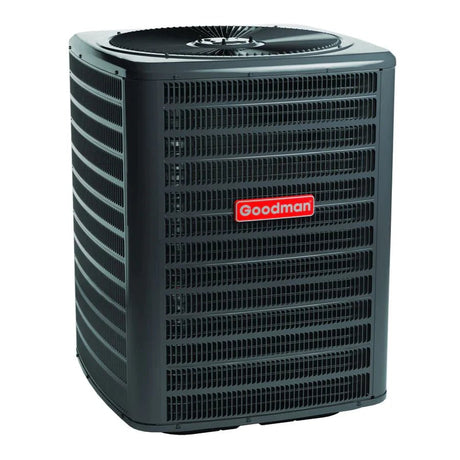
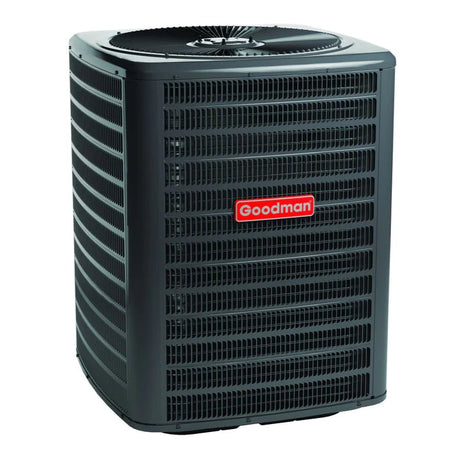
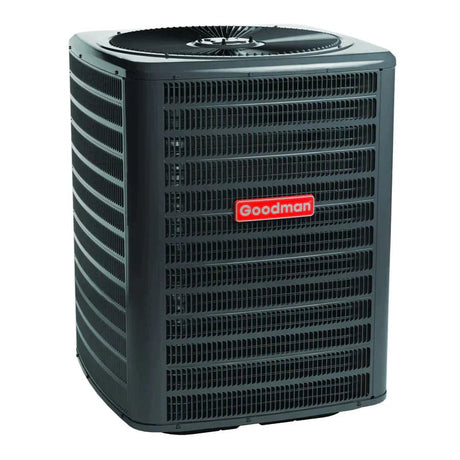

Goodman
Goodman 2 Ton Split Air Conditioner 17.2 SEER2, Two Stage,GLXT7CA2410


Goodman
Goodman GLXS3BN3610 3 Ton 13.4 SEER2 R32 Cooling Only Condenser


Goodman
Goodman GLXS4BA3610 3 Ton 15.2 SEER2 R32 Cooling Only Condenser


Wrangler
Wrangler 3.5 Ton 15.2 SEER2 R-32 Split Air Conditioner WR-GLXS4BA4210


Goodman
Goodman GLXS3BN2410 2 Ton 13.4 SEER2 R32 Cooling Only Condenser


Wrangler
Wrangler 2.0 Ton 15.2 SEER2 R-32 Split Air Conditioner WR-GLXS4BA2410


Wrangler
Wrangler 1.5 Ton 13.4 SEER2 R-32 Air Conditioner WR-GLXS3BN1810
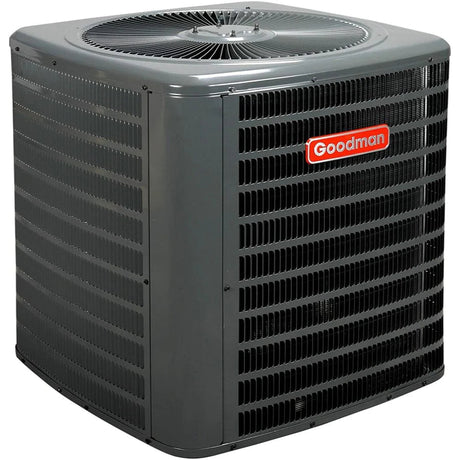
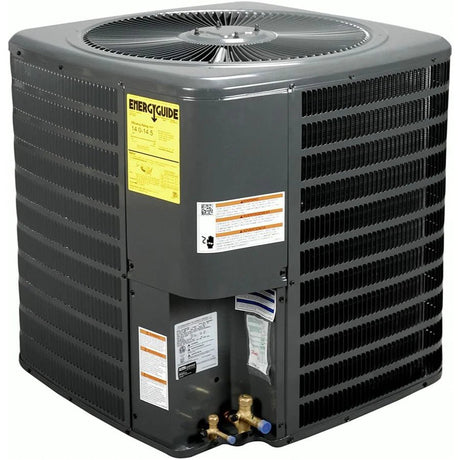
Goodman
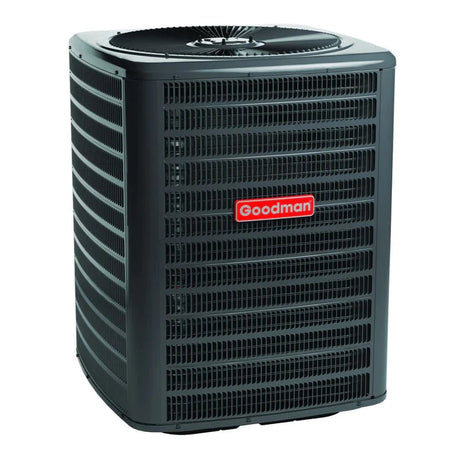
Goodman 4 Ton Split Air Conditioner 17.2 SEER2, Two Stage,GLXT7CA4810

Shop Now and transform your space with the comfort and efficiency it deserves!
We're transparent about pricing! All costs displayed on our website are final-there are no surprise charges added during checkout or installation. We clearly itemize all components (unit, installation kit, optional accessories, etc.) so you know exactly what you're paying for. NOTE: That taxes and shipping may apply to some products depending on your location and order contents. If you have questions about any specific charge on your order, our customer service team is happy to explain it in detail. Reach out to us at sales@acunitsforless.com or via Live Chat.
Heat Pump System:
Heats and cools your home using electricity and outdoor air. More energy-efficient, lower operating costs, environmentally friendly, and works well in moderate to warm climates. Qualifies for rebates and tax credits.
Gas System:
Uses natural gas for heating and requires a separate air conditioner for cooling. Better for extreme cold climates where heat pumps are less efficient. Higher fuel costs but may have lower upfront equipment expenses.
Best choice depends on: Your climate (heat pumps excel in Georgia), budget for upfront costs, long-term energy savings goals, and environmental priorities. Heat pumps typically save more money over time through lower utility bills. Contact our team for a personalized recommendation based on your home and location.
The best way to ensure you've chosen the right system is to match it with your home's cooling and heating needs. Consider your home's square footage, climate, insulation, and the number of zones you want to control. You can look at the sizing guide here, and our support team can help you narrow down options based on your specific situation. If you're unsure, we recommend consulting with a professional HVAC technician who can perform a detailed load calculation for your home.
Split System: Features separate indoor and outdoor units ideal for homes with basements or crawlspaces. Offers higher SEER ratings, better efficiency, and more customization for placement.
Packaged System: Contains all components in one outdoor unit, perfect for smaller homes or limited indoor space. Easier to install with lower maintenance needs.
Quick decision: Have indoor space? Choose split for superior efficiency. Limited space? Choose packaged.
HVAC sizing is measured in tons, where one ton equals 12,000 BTUs of cooling capacity. While you can estimate using square footage (roughly 600 square feet per ton for residential homes), the most accurate method is a professional Manual J load calculation that considers your home's insulation, orientation, windows, climate, and occupancy patterns.
Tonnage => BTU/Hour
1 ton => 12,000 BTU
1.5 ton => 18,000 BTU
2 ton => 24,000 BTU
2.5 ton => 30,000 BTU
3 ton => 36,000 BTU
3.5 ton => 42,000 BTU
4 ton => 48,000 BTU
5 ton => 60,000 BTU
Home Size (Sq. Ft.) => Recommended Tonnage
750–1,000 => 2 tons
1,050–1,400 => 2.5 tons
1,450–1,700 => 3 tons
1,750–1,900 => 3.5 tons
1,950–2,200 => 4 tons
2,250+ => 5 tons
Important: Undersizing leads to inadequate cooling; oversizing wastes energy and money. When in doubt, consult a professional. Reach out to us at sales@acunitsforless.com or via Live Chat.
If you're planning multiple units (for a ductless mini-split system or zoned setup), calculate the cooling needs for each zone or room separately using the same Manual J methodology. Add the tonnage requirements for each area to determine your total system capacity. For example, if your master bedroom is 800 sq. ft. (requiring 1.5 tons) and your living room is 1,200 sq. ft. (requiring 2 tons), you'd want a 3.5-ton system or a multi-zone setup with smaller indoor units. Our team can help you design a custom multi-zone layout based on your home's layout and needs.
Currently due to regulations, we are only selling and shipping Trane Residential units in the state of Georgia.
SEER stands for Seasonal Energy Efficiency Ratio-it measures how efficiently an air conditioning or heat pump system operates over an entire cooling season.
SEER2 stands for Seasonal Energy Efficiency Ratio 2-it's the updated, more accurate standard introduced in 2023. SEER2 provides a more realistic assessment of real-world performance by testing at various load levels and temperature conditions.
The key difference is how the systems are tested.
SEER testing used fixed temperature conditions and didn't fully account for the external static pressure in typical duct systems.
SEER2 testing is more comprehensive-it accounts for varying temperatures (65°F to 104°F), includes partial-load efficiency testing to mimic real-world fluctuating demands, and uses proper duct system static pressure to prioritize furnace blower efficiency.
Important to know:SEER2 ratings are typically 4–7% lower than SEER ratings for the same system because the testing is stricter and more realistic. For example, a 16 SEER system might have a SEER2 rating of around 14. Don't compare old SEER numbers directly to new SEER2 ratings-they use different standards.
Yes! The Home Energy Improvement Program through Georgia Power offers incentives for qualified customers in the state of Georgia purchasing high-efficiency HVAC systems like ductless mini-split heat pumps or heat pump water heaters. Our salesperson share incentive details at purchase to help you save on premium equipment. Additional rebates may be available through your local utility company or federal programs-visit Energy.gov to check your area. Ask our team for your AHRI certificate to submit rebate applications.
Note:To qualify, you must be a Georgia Power customer.
You can find the AHRI certificate on the AHRI website here.
For split systems, your indoor unit must be properly matched with your outdoor unit (condenser) to achieve the rated efficiency and ensure system longevity. You can always visit the AHRI website and use their AHRI Matchup tool to find a compatible system. The best way to find help is to reach out to us via Live Chat or email sales@acunitsforless.com.
R-32 is a single-component, low-GWP refrigerant used in modern HVAC systems as an eco-friendly alternative to R-410A. It has a Global Warming Potential of 675-one-third lower than R-410A (GWP 2,088)-and offers zero ozone depletion potential. R-32 delivers approximately 10% better energy efficiency and improved heat transfer, requires 30% less refrigerant charge, and has been safely used in over 160 million units worldwide since 2012. It's classified as A2L (mildly flammable) and represents the next generation of environmentally sustainable cooling technology.
R-454B is the next-generation, environmentally friendly refrigerant with the lowest Global Warming Potential (GWP of 466) compared to R-32 and R-410A. It maintains high efficiency, meets current EPA regulations, and ensures your system remains compliant for years to come. Choosing R-454B means investing in future-proof technology that's better for the environment and your wallet.
Effective January 1, 2025, the EPA enacted a regulation prohibiting manufacturers from producing or importing new HVAC systems using R-410A. This is because R-410A has a very high Global Warming Potential (GWP) of 2,088-meaning it contributes significantly to climate change if released into the atmosphere.
Summer bills in a hot state can sting, and an aging R-410A system usually makes them worse. If you are shopping for a new outdoor unit this year, the Goodman...

Homeowners searching for a reliable cooling upgrade often land on the Goodman GLXS AC unit because of its balance of build quality and efficiency. The GLXS lineup sits within Goodman's...

Discover why reliable backup power is critical for data centers and mission-critical facilities. Learn how Briggs & Stratton commercial standby generators from 80kW to 200kW and Cooper Corporation natural-gas gensets...

Discover the Briggs & Stratton PowerProtect lineup of 13kW, 18kW, 22kW and 26kW home standby generators. Learn how to choose the right generator size for your home, understand NGMax technology,...

Generator interlock kit vs transfer switch—which is right for your home? Learn how both generator connection methods work, their key differences, load-management considerations, and how generator size affects the equipment...

If you're shopping for a whole-house or commercial standby generator, the cooling system is one of the first forks in the road — and it quietly decides almost everything else...

A commercial power outage isn't simply inconvenient. It can stop production, shut down HVAC systems, compromise refrigeration, interrupt communications and IT equipment, disable pumps and leave employees or customers without...

One of the first questions homeowners ask when shopping for a standby generator is simple: Will it run my air conditioner? That's a particularly important question during a summer power...

When the power goes out, most homeowners don't want to think about extension cords, portable generators, or deciding which appliance gets power next. A properly sized whole-house standby generator can...

If you've ever asked what is a heat pump and why so many homeowners are switching to one, you're not alone. Heat pumps have quietly become one of the most...

A power outage hits EV owners differently than gas-car owners — you can't just drive to a gas station. Here's why a standby generator is worth considering if you charge...
Great experience installed myself labeling on the wiring got me up and running shipping was great. Unit works like it’s supposed to no complaints. 👍
Wow . . .easy to do business with. Prompt response when ordering and the best follow-ups. As good if not better than Amazon
Very fast shipping, good communication for delivery and a great price. I just bought this to replace my 15 year old Goodman that they think was hit by lightening and I'm very pleased with this unit so far, I've only been using it for a couple days now with mild weather but it seems to be working flawlessly.....Hope I get another 15 years or even more out of this one.
Perfect
I recently changed out a 27 year old York HVAC system for a Goodman. The installer said I would use the same 5” filter- WRONG! It’s a nominal 4.5”. This fit perfect and was the exact size and make used by the installer. Good product and size information. Easy order process. Only odd thing is they send you an email to confirm your order- ie you must reply-after you’ve received an order confirmation from them. What?
easy to work with
great support and service
Great job. Quick shipping, and good customer service after being told I received it. Called and received the next day.
Love it
Easy and good pricing
Excellent service by the AC Units for Less and the product itself was in good condition. I initially made a phone inquiry and got a human on the line to discuss this purchase, was told up front it would take weeks since it had to be obtained from the manufacturer. I felt the customer service was very good. After I purchased since it was the lowest price I could find, I received an email to confirm that I wanted it. Communication was good. My order was confirmed and then when it was due to come I was informed again by email. The product itself was in good condition, undamaged and I installed it myself with out any problems. Saved myself the cost of having an HVAC company order it for me and installing it, which in California meant about $400. I'd use this company again if I need something. Thank you.
As an owner of mobile home parks I'm always looking for cost-effective ways to insure our tenants are comfortable and happy. This PTAC unit and this company allows me to provide both. I couldn't be more satisfied. Highly recommend.
It came in, and i installed it
It works awesome.
The price was my motivator here. I saved about $60. The shipping was slower than expected. Yet for the price, it didn't matter to me. I will shop here again.
They were amazing folks to talk to on the phone, ordering was easy, and shipping was FAST. The units came in and fit our needs exactly! Highly recomend!! Thank you!
Store offers competitive pricing on HVAC and water heater products with mixed service experiences. Customers praise fast shipping, helpful phone support, and quality products. However, some report slow delivery, damaged items, poor packaging, and unresponsive ...


