

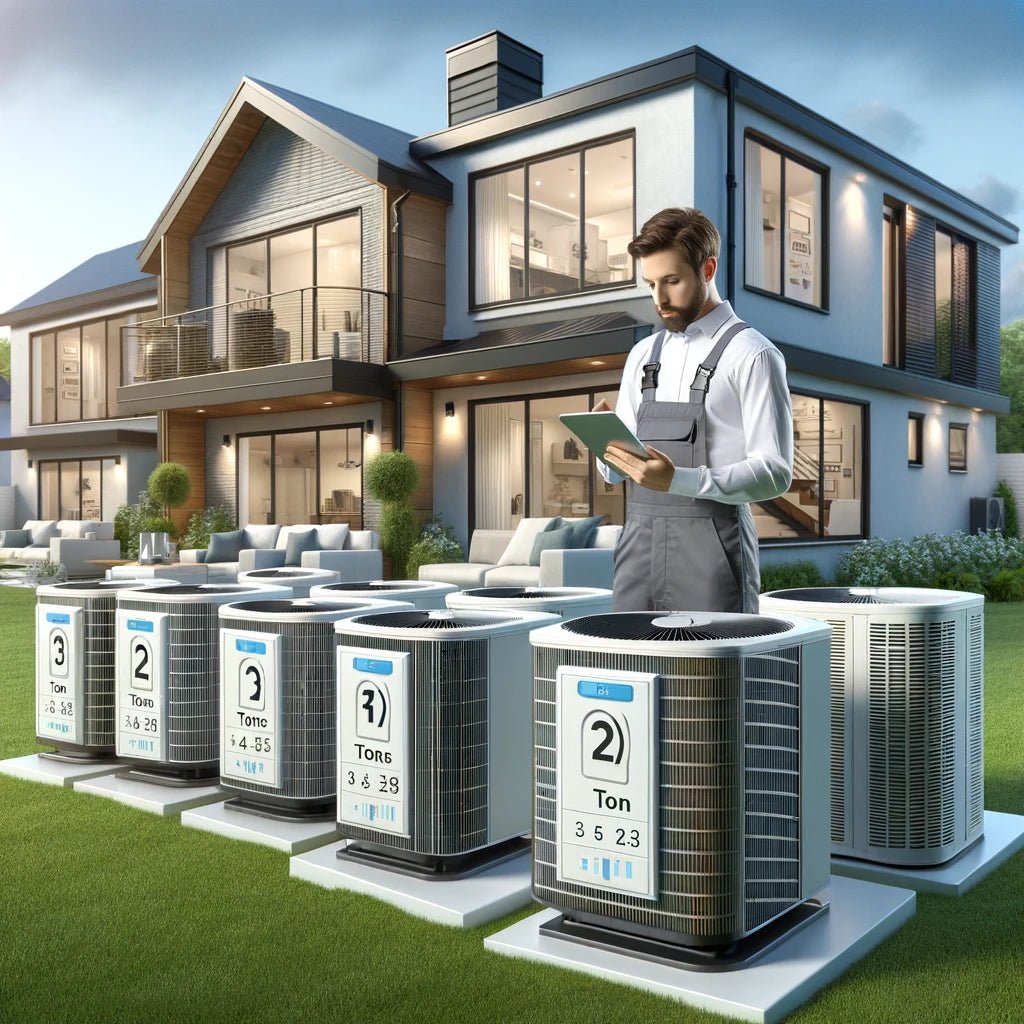
Tonnage is a crucial aspect of HVAC systems, particularly air conditioners, as it signifies the cooling capacity of the unit. It essentially tells you how much heat an air conditioner can remove from a space in one hour.
Do I Need a 1-Ton, 2-Ton, or 3-Ton HVAC System? Demystifying Tonnage for Homeowners
Choosing the right HVAC system size is crucial for maintaining comfortable temperatures in your home while avoiding unnecessary energy consumption and costs. One of the key factors in this decision is tonnage, which signifies the cooling capacity of the system. But navigating the world of tons and figuring out which one is right for your home can be confusing. This article aims to shed some light on this topic and help you make an informed decision.
Understanding Tonnage:
- Tonnage doesn't refer to weight. It represents the cooling capacity of an air conditioner, measured in BTUs (British Thermal Units) per hour. One ton is equal to 12,000 BTUs.
- Higher tonnage signifies a greater cooling capacity. A 3-ton AC can remove more heat per hour compared to a 1-ton unit.
Do I Need a 1-Ton System?
-
Generally suitable for:
- Smaller spaces: Apartments, studios, or very small homes (around 500-750 sq ft) with good insulation.
- Mild climates: Locations with moderate summers where the temperature rarely exceeds 80°F.
-
Important considerations:
- Even a 1-ton system might struggle in poorly insulated spaces or hotter climates.
- Consulting a professional is crucial to ensure its adequacy for your specific needs.
Do I Need a 2-Ton System?
-
A common choice for:
- Average-sized homes: Houses ranging from 1000-1500 sq ft with average insulation.
- Moderate climates: Areas with warm summers where the temperature occasionally reaches the high 80s or low 90s.
-
Points to remember:
- Factor in additional heat gain sources like extensive sun exposure or large windows.
- Consider upgrading to a 3-ton system if your home has poor insulation or is located in a hot and humid climate.
Do I Need a 3-Ton System?
-
Ideal for:
- Larger homes: Houses exceeding 1500 sq ft, especially with multiple floors.
- Hot and humid climates: Regions with consistent high temperatures and humidity.
- Homes with significant heat gain: Poor insulation, large windows, or extensive sun exposure.
-
Keep in mind:
- Oversizing your system can lead to short cycling, reducing efficiency and comfort.
- Consult an HVAC professional to determine the exact tonnage required to avoid oversizing.
Remember:
- Tonnage is just one factor. Other factors like insulation level, ductwork, and occupant lifestyle also influence cooling needs.
- Consulting an HVAC professional is highly recommended. They can assess your specific situation, recommend the most suitable system size, and ensure optimal performance and cost-effectiveness.
By understanding the basics of tonnage and seeking professional guidance, you can choose the right HVAC system for your home, ensuring a comfortable and energy-efficient environment.
Here's a breakdown of its significance:
1. Measuring Cooling Power:
- Contrary to its name, tonnage doesn't represent the weight of the system.
- One ton is equivalent to 12,000 British Thermal Units (BTUs) per hour. BTUs measure the amount of heat required to raise the temperature of one pound of water by one degree Fahrenheit.
- So, a 3-ton AC unit can remove 36,000 BTUs of heat per hour, making it more powerful than a 1-ton unit (12,000 BTUs/hour).
2. Selecting the Right Size:
- Choosing the correct tonnage for your HVAC system is vital for efficient cooling and cost savings.
- An undersized unit will struggle to maintain the desired temperature, leading to discomfort and increased energy consumption as it runs longer to compensate.
- Conversely, an oversized unit will cool the space quickly but may cycle on and off frequently, reducing efficiency and potentially increasing wear and tear.
3. Factors Affecting Tonnage Needs:
- Several factors determine the tonnage requirement for your space, including:
- Square footage: Larger spaces generally require higher tonnage.
- Insulation level: Better insulation reduces heat gain, requiring less cooling capacity.
- Climate zone: Hotter climates necessitate higher tonnage for efficient cooling.
- Window size and sun exposure: More windows and sun exposure increase heat gain, requiring more cooling power.
4. Consulting a Professional:
- Determining the appropriate tonnage for your specific needs can be complex. It's recommended to consult an HVAC professional who can assess your space, consider all relevant factors, and recommend the most suitable system size based on your requirements.
While consulting a professional is highly recommended for accurate sizing, here are some simple calculations to get an initial estimate of the required tonnage for your air conditioning needs:
Method 1: Square Footage Approach
- Measure the total square footage of the area you want to cool.
-
Multiply the square footage by a factor based on your climate and insulation level:
- 20 BTU/sq ft: Well-insulated, mild climate.
- 25 BTU/sq ft: Average insulation, moderate climate.
- 30 BTU/sq ft: Poorly insulated, hot climate.
- Divide the result by 12,000 to get the estimated tonnage.
Example: For a 1500 sq ft home in a moderate climate with average insulation:
- 1500 sq ft * 25 BTU/sq ft = 37,500 BTU
- 37,500 BTU / 12,000 BTU/ton = 3.13 tons (round up to the nearest whole number: 4 tons)
Method 2: Existing Unit BTU Rating
- If you have the existing air conditioner's model number, locate the BTU rating on the unit or its manual.
- Divide the BTU rating by 12,000 to get the existing unit's tonnage.
Important Note:
- These are rough estimates and may not be accurate for every situation.
- Several factors beyond square footage and climate can impact tonnage needs.
- Always consult an HVAC professional for a precise calculation and system recommendation based on your specific circumstances.


